An exclusion decides where a child is taught. It does not decide what they come out with.

An exclusion decides where a child is taught. It does not decide what they come out with.
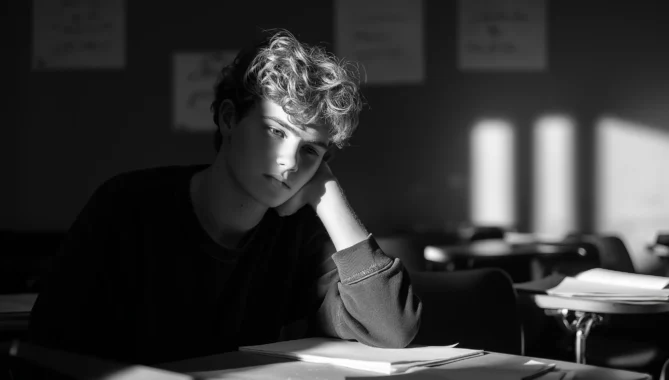
After a permanent exclusion the local authority has to arrange full-time education from the sixth school day. In practice, arrangements often take longer than that, and the gap lands in the middle of a term that cannot afford to lose weeks.
So we start with teaching rather than paperwork. One-to-one lessons, English and maths first if time is short, while the larger questions get worked through. Those questions are easier to answer well when the child is not sitting at home losing
Read our case studiesAn exclusion is a decision about a school place. It is not a verdict on the child and it is not the end of the qualification.

Exclusions arrive in different shapes. Some follow years of warnings. Others follow a single incident that nobody, the school included, quite saw coming. These are the five we see most often.
The headteacher’s decision is reviewed by the governing board, and you can request an Independent Review Panel if it stands. We are not lawyers and do not represent families at panel. What we can do is put the teaching in place, supply the academic record, and work alongside a solicitor you have appointed.
A suspension is usually a warning rather than a conclusion, and it is the point at which something can still change. We use the time to establish what set it off and to agree terms for the return that both sides can realistically keep to.
When the same thing keeps happening, the incident is not the problem. Academic frustration, unmet SEND needs and anxiety all produce behaviour that reads as defiance from the front of a classroom.
Sometimes behaviour is not really the issue. Communication has broken down, both sides have stopped listening, and the exclusion is the end of a long argument. We can sit between the two and establish whether anything is still salvageable.
Moving a child on, to a new school, to Lionheart School, or to full-time home education. Teaching runs throughout, so nothing is lost while the arrangements are made.

An exclusion in Year 10, Year 11 or the A-level years puts the qualification itself at risk, and for a reason parents rarely see coming. Schools use different exam boards for different subjects. A student who moves in January can find that the syllabus, the set texts and the coursework already completed do not carry across.
There are usually two ways through. The first is to keep the student on the original school’s register for examination purposes only. Some schools will agree to that, and we will ask on your behalf. The second is to enter them here. Lionheart is a JCQ and CAIE registered examination centre in West Kensington, so students we teach can sit their GCSEs, IGCSEs and A-levels with us, on the same days as everyone else.
Most families use more than one of these, and the mix changes as the situation settles.
One-to-one teaching arranged quickly, at home or online. English and maths first where time is short, then the rest of the timetable.
Our one-to-one day school in West Kensington, taking a small number of students. Used both as a short placement while a school is found, and as a longer arrangement where mainstream is not the answer.
Working out where the child goes next and getting them in. We deal directly with heads, admissions staff and SENCOs, and we know which schools will consider a student with an exclusion on the record.
Therapeutic and pastoral support
Where a psychologist or therapist is already involved, we teach to their strategy rather than around it.
We are not a legal service. Where an appeal or an EHCP assessment is the right route, we work alongside education solicitors and can point you to IPSEA and the Coram Children's Legal Centre, both of which give free advice.

Testimonial
"Thank you for stepping in at the lowest moment in our son’s education. The transition through Lionheart School, combined with the tutoring you arranged, helped him stabilise so quickly. We never imagined he’d be happy at school again, but the placement you found for him has been a perfect fit."
Oliver Parents of J., age 14

Students arriving after an exclusion have usually had a run of adults lose patience with them. We choose tutors for composure as much as subject knowledge: someone who can absorb a difficult session and arrive the following week exactly the same. Every placement is overseen by Lionheart’s senior education team, so the tutor is not working alone.
Learn MoreEnhanced DBS and international safeguarding checks on every tutor. Beyond that we interview for temperament, because a strong degree tells you nothing about how someone responds to being tested.
We coordinate with therapists, counsellors, school SENCOs and local authority caseworkers, so everyone involved is working to the same plan.
Senior consultants review each placement, looking at wellbeing alongside progress. If the match is wrong we change it rather than waiting for the end of term.

For students rebuilding confidence after anxiety or burnout, lessons aren’t just about grades, they’re about rediscovering curiosity. One week it’s creative writing by the river; another, science through cooking. When learning feels safe, everything changes.
What will you enjoy learning?The headteacher makes the decision and your child may have to leave the same day. You should receive a letter setting out the reason, and if you have not, ask for one. The governing board then reviews the decision, and if it stands you can request an Independent Review Panel. The local authority must arrange full-time education from the sixth school day. Headteachers, academy trusts and local authorities all work within the DfE’s suspension and permanent exclusion guidance.
We aim to speak to the family within 48 hours and, in most cases, have a tutor teaching that same week. The urgency is not a sales point. Every week out of teaching creates a gap that has to be filled later, usually at a worse moment.
No. We are an education provider, not a legal service, and we do not represent families at an Independent Review Panel. We can supply attendance records and a full account of what has been taught and achieved in our sessions, and work alongside a solicitor you have appointed. IPSEA and the Coram Children’s Legal Centre both give free advice on exclusions.
Sometimes. Section 19 of the Education Act 1996 requires the local authority to arrange suitable education for children who are out of school, and some authorities will fund independent provision for a period. Where a placement at Lionheart School or online tuition is agreed, we deal with the caseworker directly and provide the reporting they require.
Yes, though it needs organising early. The risk is the exam board mismatch between schools rather than the exclusion itself. We either arrange for the student to stay on the original school’s register for examinations, or enter them at our own registered centre in West Kensington.
Often possible after a suspension, and occasionally after a permanent exclusion is overturned. We help agree a reintegration plan so both sides know what has changed and what happens if it does not hold.
No, though many families choose it, at least for a period. If you do, Section 7 of the Education Act 1996 makes you responsible for providing a suitable full-time education. We can build the timetable and teach it.
Yes, and it is better if we do. We take the clinical strategy as given, build the teaching around it, and report back on what we are seeing in sessions.