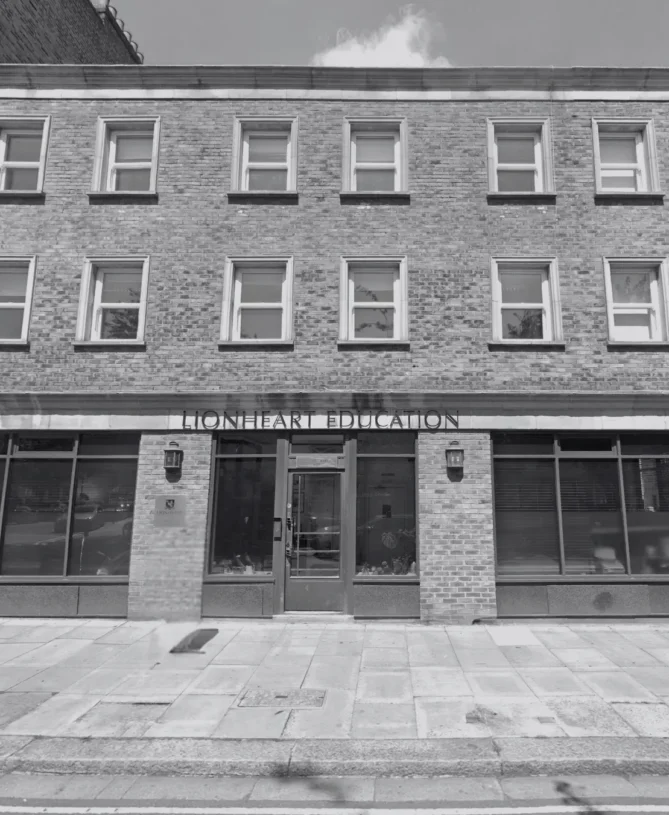
What is alternative provision at Lionheart School?

Alternative provision is education arranged for pupils who cannot currently attend mainstream school. At Lionheart School, it is for secondary pupils out of school because of mental health difficulties, SEND, an EHCP that is not being met, long-term illness or exclusion. Pupils are taught one-to-one at Blythe Hall in West Kensington, online, or through a mix of both, with a programme that keeps their curriculum and qualifications on track.


Lionheart Student portrait
Tutor with two students Lionheart School

Who we support

Some students join us after a school placement has broken down. Others are too anxious to attend, are waiting for a suitable setting, or need a calmer environment while their EHCP or longer-term plan is resolved.

Our alternative provision is particularly suited to:

  • Students in Years 7–13 preparing for GCSEs, IGCSEs or A-levels who cannot attend mainstream school.
  • Young people with mental health difficulties, school refusal or emotionally based school avoidance (EBSA). Anxiety about school rarely comes from one thing, so we work on what is keeping them away as well as the lessons they have missed.
  • Students with SEND, including autism and ADHD, who need more consistency and predictability than a classroom can give. Parents and local authority caseworkers can both refer.
  • Learners in transition: between schools, following exclusion, awaiting a placement agreed with the local authority, or still on a school roll and needing a hybrid arrangement.

Some students attend for a short period as a bridge back into school or college. Others stay longer while completing key qualifications and preparing for their next stage.

Section 19 Alternative Provision for Local Authorities

Under Section 19 of the Education Act 1996, local authorities must arrange suitable education for children who cannot attend school because of exclusion, illness or other reasons. Lionheart School can be commissioned as section 19 alternative provision for pupils in London, with or without an EHCP.

Placements often need to start quickly, and caseworkers need more than a timetable. Each placement comes with a risk assessment, a programme matched to the pupil’s existing curriculum, and regular written reports so everyone involved can see how it is going.

What We Offer

Interim, part-time and hybrid options

Not every student is ready to step straight into a full timetable. Some need a slower, phased approach.

Interim Programmes

Short-term provision for students out of school for a few weeks or in crisis. It keeps them learning while longer-term decisions are made, often combining online and on-site lessons.

Hourglass illustration

Shorter days or shorter sessions that help stabilise attendance and rebuild stamina. Timetables are agreed with parents and caseworkers, and with the EHCP where one is in place.

Consultants discussing at a table

Lessons at Blythe Hall combined with online teaching and independent study, planned around school, therapy or medical treatment. Useful when a child cannot attend full-time or travel is difficult.

Interim Programmes
Part-time placements
Hybrid arrangements

Alternative provision is not always the right first step. Some families are better served by education crisis management, specialist SEND consultancy or homeschooling, and we will tell you so when you get in touch.

Student studying

What to Expect

Working together around the student

Alternative provision only succeeds when every adult around the student is working to the same plan. We work closely with families, schools, therapists and local authorities so each student gets consistent, joined-up support.

  • Clear communication

    Families receive regular updates on progress, attendance, curriculum and wellbeing, with a single point of contact overseeing the programme. Written reports are shared with everyone involved in the student’s care.

  • Collaboration with schools and professionals

    We liaise with SENCOs, pastoral teams, educational psychologists, clinicians, GPs, social workers and local authority caseworkers so that teaching, therapeutic work and reintegration plans stay coherent.

  • EHCP-aligned provision (where applicable)

    If a student has an EHCP, we map daily teaching to its agreed outcomes, so support stays tied to their educational objectives and can be evidenced at review.

  • Reintegration or onward placement

    For students returning to school or moving to a new setting, we build gradual, structured plans that give them the best chance of lasting success. If a route stops working, we say so early and change the provision.

Frequently Asked Questions

  • Do You Accept Local Authority Referrals for Alternative Provision?

    Yes. We consider local authority requests for funded placements for pupils with or without an EHCP. Before confirming a place, we assess the pupil’s needs and readiness to learn, and complete safeguarding checks.

  • When Does a Child Need Alternative Provision?

    A child may need alternative provision after suspension or permanent exclusion, during prolonged illness, after school refusal or EBSA, when an EHCP placement has broken down, or while waiting for a suitable school place. It is also used when mainstream attendance is not currently safe or realistic. The provision should match the child’s age, ability, needs and next step.

  • How Quickly Can a Student Start Alternative Provision?

    Most placements start one to two weeks after first enquiry. That time goes on matching tutors, completing risk assessments and paperwork, and designing the programme. Urgent cases can move faster, sometimes within days.

  • What Qualifications Can a Student Take During Alternative Provision?

    Students can work towards GCSEs, IGCSEs, AS and A-levels with the major exam boards, including AQA, Pearson Edexcel, OCR and Cambridge International. Pupils joining from schools abroad are welcome. Exams can be sat at our registered exam centre in London.