Yes, you can prepare for the 11 Plus without a tutor and many families do successfully. DIY preparation works best for children already reading above age, numerate, and comfortable with self-directed practice, and where the target schools are standard grammars or less selective independents. At super-selective schools such as Tiffin Boys’ or highly competitive London independents, self-directed preparation is harder because of the specific test-format expertise tutors bring.
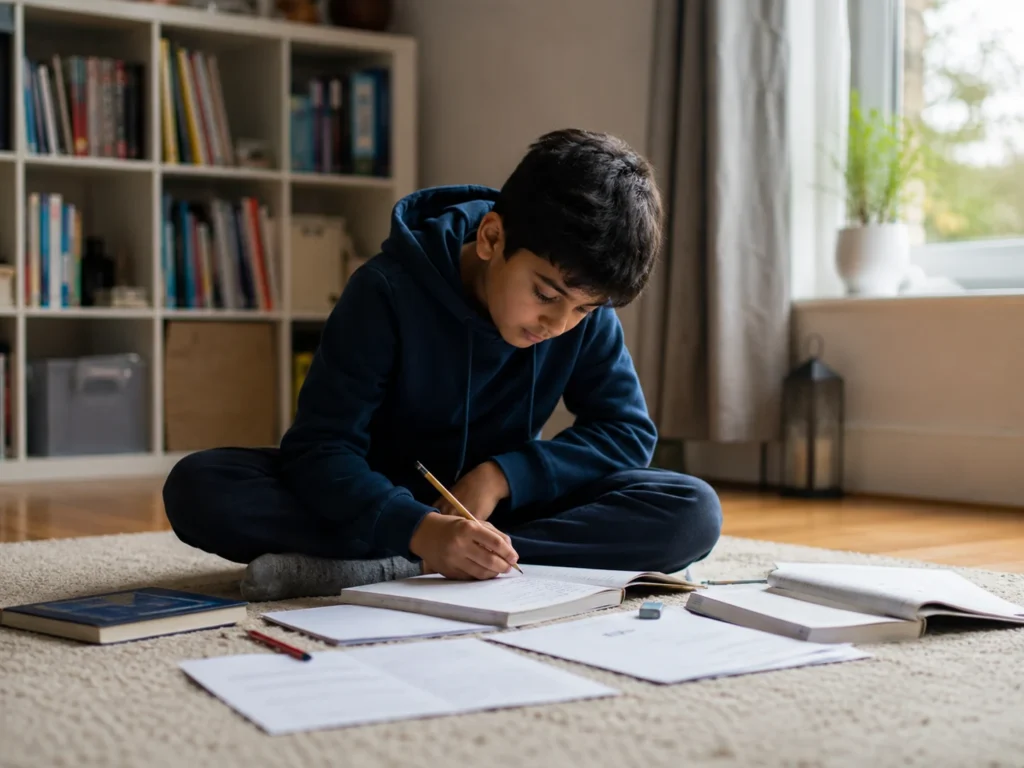
When DIY Preparation Works
One of the biggest myths in the 11 Plus world is that every successful child must have a tutor. That simply is not true.
Many families prepare successfully on their own, particularly where the foundations are already strong and the family approaches preparation in a structured, realistic way. DIY preparation tends to work best when a child is already reading confidently above chronological age, enjoys the academic challenge and can work independently without constant prompting.
Numeracy matters too. If arithmetic fluency is already secure, so times tables are automatic, number sense is strong and word problems are approached confidently, then much of the academic groundwork is already in place.
Parent confidence also plays a role. A parent who is comfortable supporting comprehension, discussing vocabulary and guiding reasoning questions will naturally find DIY preparation easier than one who feels unsure around those areas.
The Good Schools Guide often reflects a wider truth about selective preparation: consistent habits at home frequently matter more than expensive tutors.
For standard grammar routes, and for many less selective independent schools, DIY can be an entirely sensible path.
DIY Vs Tutored 11 Plus — By Situation
| Situation | DIY realistic? | Hybrid recommended? |
|---|---|---|
| Standard grammar, strong reader | Yes | If Year 6 nerves kick in |
| Standard grammar, average reader | Viable with parent subject knowledge | Recommended |
| Super-selective grammar (Tiffin etc.) | Challenging | Yes — tutor for test-format expertise |
| Top London independent (St Paul’s etc.) | Very challenging | Yes — school-specific papers |
| Less selective independent 11+ | Yes | Optional |
| Budget-constrained family | Yes (with effort) | Mock tests + occasional review |
Lionheart Education is unusually honest here: not every family needs full tuition, and for many, self-directed preparation is perfectly realistic.
When You Need a Tutor
There are situations where DIY becomes much harder. If your child is targeting a super-selective grammar such as Tiffin Boys’ School the margin for error becomes very small. These routes often require not just strong academic ability, but precise familiarity with question style, pacing and competition-level standards.
The same is true for leading independent routes, particularly those involving the ISEB Common Pre-Test or demanding school-set papers.
Tutors can also be valuable where a child has specific gaps perhaps comprehension is strong but Maths is weaker, or verbal reasoning is unfamiliar territory.
Then there is accountability. Some children simply work better when an external adult sets expectations. That is not weakness; it is temperament.
If home preparation is becoming inconsistent, tense or difficult to judge objectively, outside support often becomes useful.
Your DIY Toolkit — By Subject
DIY works best when families use strong resources rather than random materials.
English
Bond 11 Plus remains one of the strongest structured series of books available, particularly for comprehension and English fundamentals.
CGP 11 Plus English books are also excellent for accessible practice with clear worked examples.
Daily reading remains the most powerful free tool of all. Local libraries are invaluable, and Bookfinder can help families locate books matched to reading age and interest.
Creative writing prompts are widely available online and are particularly useful for independent-school preparation.
Maths
Again, Bond 11+ Maths is strong for structured progression and CGP 11+ Maths books offer useful question variety.
BBC Bitesize KS2 is one of the best free Maths resources available nationally, especially for revisiting core concepts. TheSchoolRun and Maths is Fun can also help make tricky concepts easier to visualise.
Verbal Reasoning
Bond 11 Plus Verbal Reasoning is widely used for good reason; it is comprehensive and highly detailed. Schofield & Sims remains a respected resource, particularly for building solid familiarity with all the question types. CGP’s verbal reasoning books add further useful practice.
Non-Verbal Reasoning
Bond NVR and CGP NVR resources are both strong. Pattern-recognition books, logic puzzles and spatial games can also quietly build useful instinctive skills.
DIY preparation is often strongest when some of the work feels playful rather than relentlessly exam-like.
Past Papers — Where to Find Free Ones
Families often assume they must buy everything.
That is not true. GL Assessment — 11 Plus publishes familiarisation materials that provide useful free starting points. Some individual schools publish sample papers through their admissions sections. ISEB also publishes preparation guidance and practice materials for its routes.
Community sites still host legacy CEM materials, although CEM tests have been discontinued since 2022 and should be treated primarily as supplementary reasoning practice rather than current-format preparation.
11 Plus Leap also offers limited free material.
Building a DIY Schedule
DIY still needs structure. Year 4 should usually involve one to two hours a week, focused on reading, mental arithmetic and gentle reasoning exposure. Year 5 autumn might rise to two to three hours weekly. By spring, three to four hours becomes more realistic, particularly as timed papers start to appear. By summer, weekly mock exposure is useful. Year 6 becomes more intensive, especially approaching September or January sittings.
The Education Endowment Foundation consistently points to deliberate practice and effective feedback as the strongest learning drivers. That is useful perspective here: thoughtful review matters far more than clocking up hours for the sake of it.
Pitfalls of DIY
DIY has weaknesses too. Parents often mark too kindly or over-help during review. It can be hard to judge whether a child is genuinely on track compared with the competition and specific test-format nuance may be missed.
Of course, parents naturally care very much, meaning that home learning can sometimes become emotionally loaded. That is where a reality check can be valuable.
Hybrid Approach — Often The Sweet Spot
For many families, the best route is neither fully DIY nor fully tutored. It is hybrid.
Families can prepare independently through Year 5, using strong books and free resources, then bring in targeted expert help later.
That might mean:
- four to six tutor sessions in Year 6
- quarterly review sessions
- a mock-test programme
- subject-specific help where gaps appear
This keeps cost sensible while adding expertise where it matters most.
How Lionheart Education Supports DIY Families
Lionheart Education takes a pragmatic view. If DIY is realistic for your family, we will say so. Budget-constrained families do not always need full tuition packages. Sometimes a baseline assessment, occasional mock tests and a few tutor sessions before the exam are enough.
That honest framing is unusual in the tutoring market. We offer flexible support, pay-per-session reviews, mock testing and occasional strategic guidance, without requiring a full long-term commitment.
FAQ’S
-
Can you prepare for the 11 Plus without a tutor?
Yes, and many families do successfully. DIY preparation works best for children reading above chronological age and numerate, with a parent who has English and reasoning subject knowledge, and where the target is a standard grammar or less selective independent school. Super-selective schools are much harder to prepare for without a specialist tutor.
-
What are the best 11 Plus books for self-study?
Bond 11+ (Oxford) is the most widely-used series across English, Maths, verbal and non-verbal reasoning. CGP 11+ books are also strong for practice with worked solutions. Schofield & Sims is commonly used for verbal reasoning. BBC Bitesize KS2 is a free resource for Maths content.
-
Where can I get free 11 Plus past papers?
GL Assessment publishes a familiarisation booklet free on its website. Individual schools (including Tiffin Boys’ and St Paul’s) sometimes publish sample papers in their admissions sections. ISEB publishes practice materials for the Common Pre-Test. Community sites host legacy CEM papers, though CEM tests have been discontinued since 2022.
-
Is DIY 11 Plus preparation cheaper than tutoring?
Substantially, yes. Self-directed preparation typically costs £100–£300 for books, papers and resources, vs £2,000–£6,000 for tutoring from Year 5 through Year 6. A hybrid approach DIY with occasional paid mock tests and a few tutor sessions before the exam costs £500–£1,500 and is often the best value.